
What a Guest Sees Through a Two-Year-Old Dome
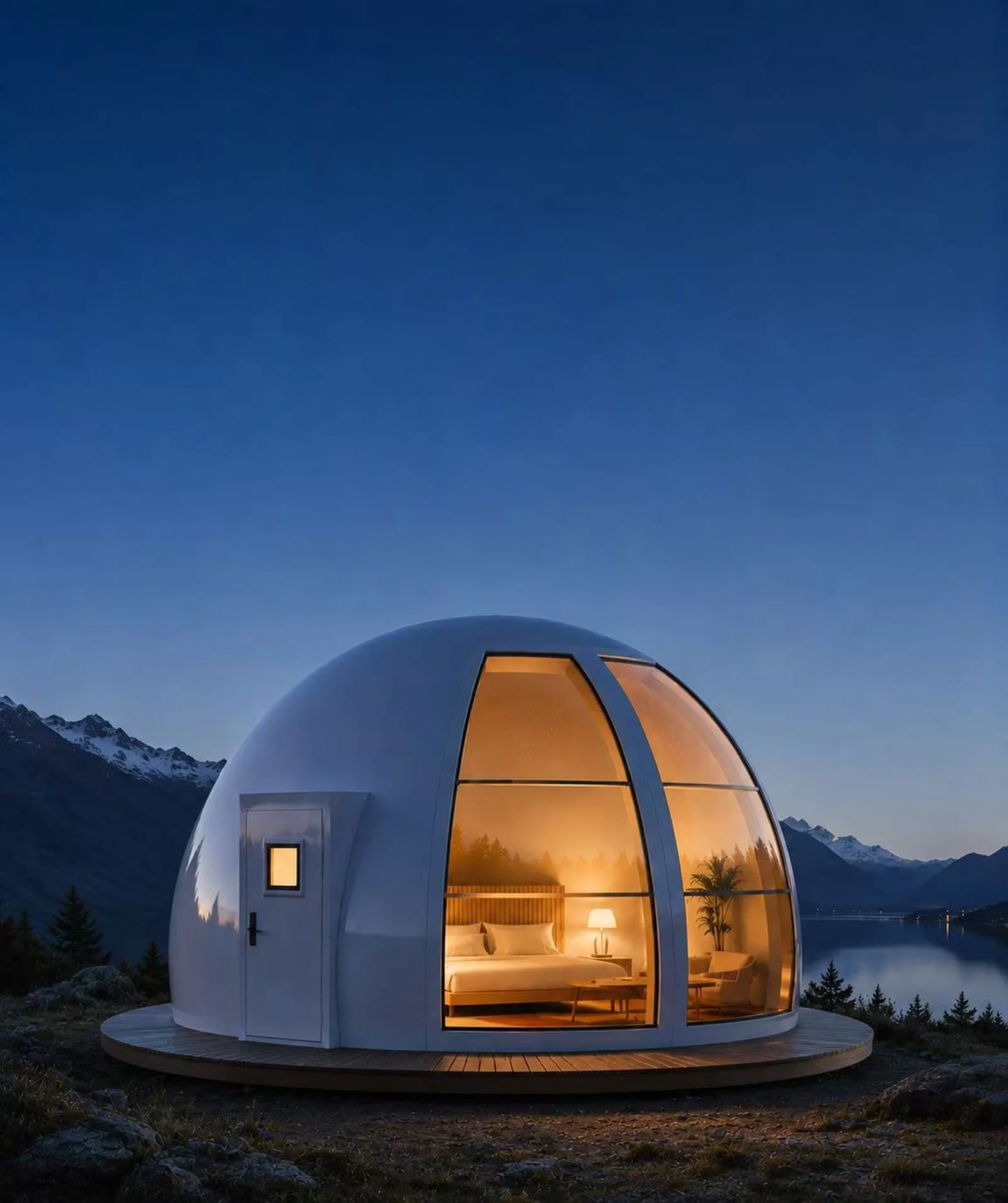
A glamping guest books a dome for one reason: the view.
They pay a premium for a panoramic window onto mountains, forest, or open sky. Two seasons in, that window is a yellowed, scratched panel. The view they paid for now sits behind a haze.
The guest does not complain about the weather or the location. They complain that the dome does not look like its photos.
The defining promise of a transparent dome is an unobstructed view. Most glamping domes deliver that promise through polycarbonate or PVC film. Those materials degrade under sunlight: they yellow, they scratch, and a single pane passes heat straight through. The view fades because the material itself fades. This is not wear and tear; it is material chemistry.
Why Plastic Clouds, Yellows, and Scratches
Ultraviolet light breaks the polymer chains that hold polycarbonate together. Two reactions drive the damage: photo-Fries rearrangement and photo-oxidation.
Both cut the chains. The material loses molecular weight, turns yellow, and grows brittle. It increasingly absorbs blue light, which is why the tint deepens over time.
Surface hardness is a separate failure. Polycarbonate measures B to HB on the pencil hardness scale — softer than copper, close to a fingernail. Glass measures 6 to 7 on the Mohs scale.
A guest's ring, a zipper, dust wiped across the surface: each leaves a mark. The scratches scatter light, and the "clear" panel turns frosted.
Polycarbonate is a thermoplastic with two hard limits: low UV stability and low surface hardness. UV causes photo-oxidation that yellows and embrittles the polymer. Its B-to-HB pencil hardness means everyday contact scratches it. No amount of care reverses either limit. They are built into the material.
What Operators Spend Trying to Save a Plastic View
The industry sells coatings as the fix. A UV-protective layer slows yellowing. A silica hard coat lifts scratch resistance from B to about 4H.
Both are real, and both are temporary. Coatings weather, wear, and must be reapplied. Uncoated polycarbonate still loses 20 to 30 percent of its light transmission within two to three years outdoors, per ASTM G154 testing.
Field data is worse. Greenhouse panels made of UV-stabilized polycarbonate drop from 90 percent to 65 percent light transmission after five years, with haze above 20 percent.
Operators then choose: polish, re-coat, or replace. Each option is a recurring cost that buys back only part of the original clarity. The guest who saw a clouded window has already written the review.
Coatings and polishing are recurring expenses, not fixes. They address the symptom after the polymer has degraded. Each re-coat buys partial clarity for a shorter time. The root cause — a material that yellows and scratches — remains. Money spent downstream never restores the original view.
The Glass Path: A Sealed Double-Glazed Window
Glass takes a different route to the same promise. It does not yellow under sunlight, because it is not a polymer chain to break. It does not scratch under everyday contact, because it is harder than almost everything a guest carries.
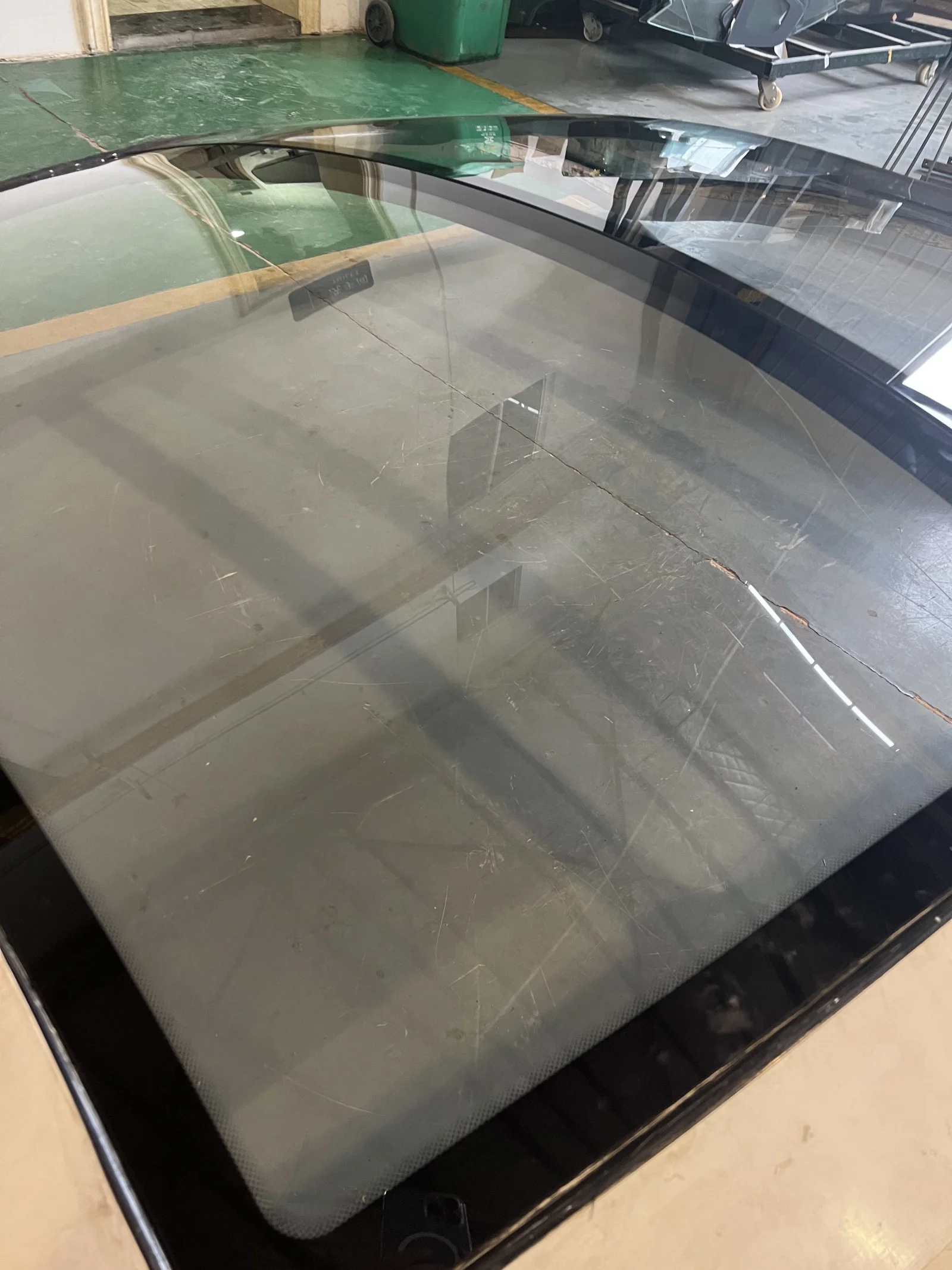
A MarsDome Horizon Window is built from the same safety glass used in car windshields — rebuilt as a sealed double-glazed unit with an insulating air cavity between the panes.
The air cavity changes the thermal picture. A single pane, plastic or glass, sits near R-1. A double-glazed unit reaches roughly R-2 with clear glass and R-2.9 with a low-E coating. That means the window loses about half the heat of a single pane.
Clarity stays clarity. There is no coating to reapply and no surface to re-polish. The window keeps its view the way a car windshield keeps its view: for the life of the structure.
Glass sidesteps both of plastic's hard limits. Glass is UV-stable, so it does not yellow. Glass is hard — Mohs 6 to 7 — so it resists scratching without a coating. Rebuilt as a double-glazed unit, it adds an insulating air cavity that a single pane cannot offer. The material and the structure solve the problem together.
The Numbers: Glass vs Plastic, Side by Side
The difference is measurable, and it is not close.
| Property | Polycarbonate / PVC Film (single pane) | MarsDome Horizon Window (double-glazed glass) |
|---|---|---|
| Yellowing (UV) | Uncoated sheet yellows; yellowing index exceeds 10 after 5 years | Glass is UV-stable; clarity does not drift with exposure |
| Scratch resistance | B–HB pencil hardness; scratches from a ring or zipper | Mohs 6–7; resists everyday contact without a coating |
| Thermal insulation | Single pane ≈ R-1; heat passes straight through | Sealed air cavity ≈ R-2 to R-2.9; about half the heat loss |
| Light transmission over time | 90% → 65% in 5 years; haze above 20% | Transmission stable; no haze build-up |
| Maintenance | Re-coat, polish, and eventually replace the panel | Clean like any window; no coating to reapply |
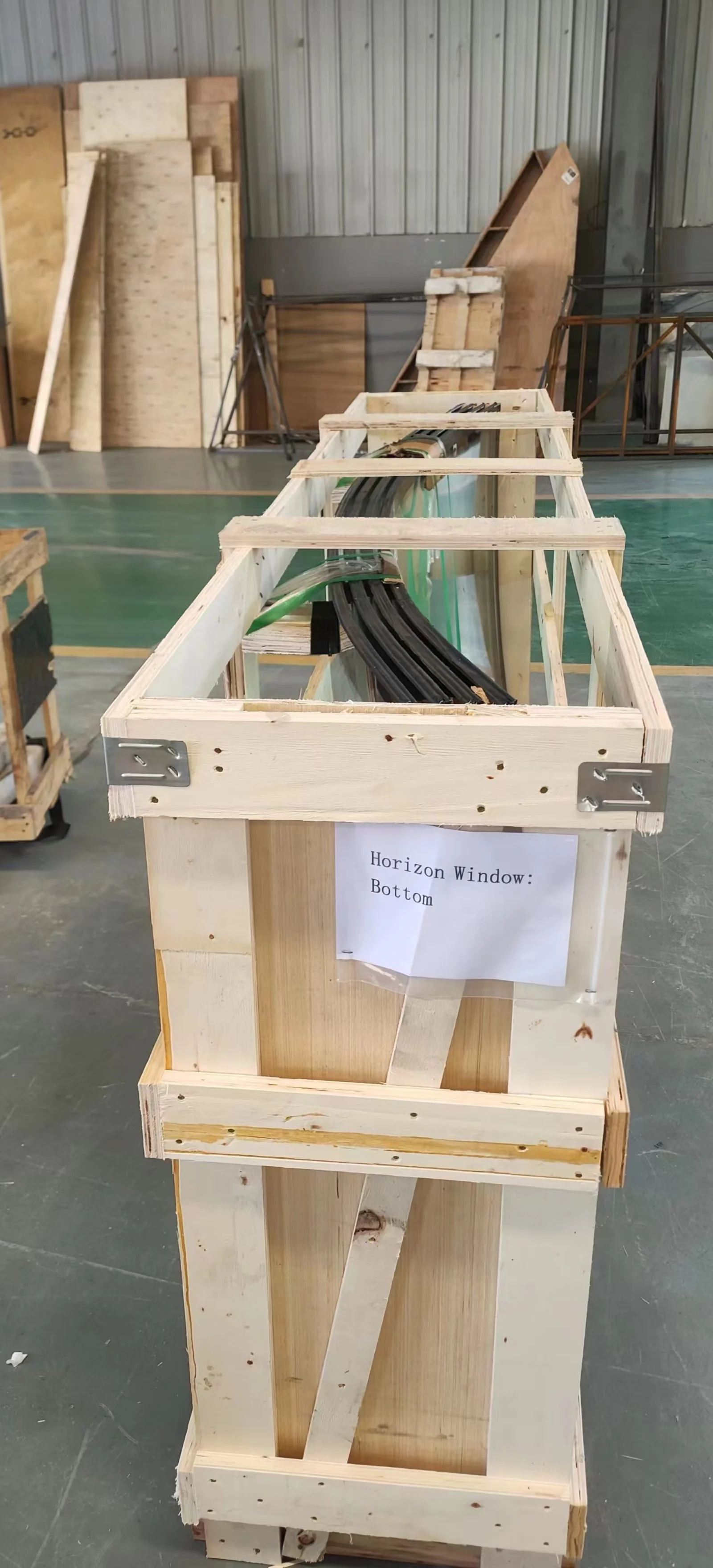
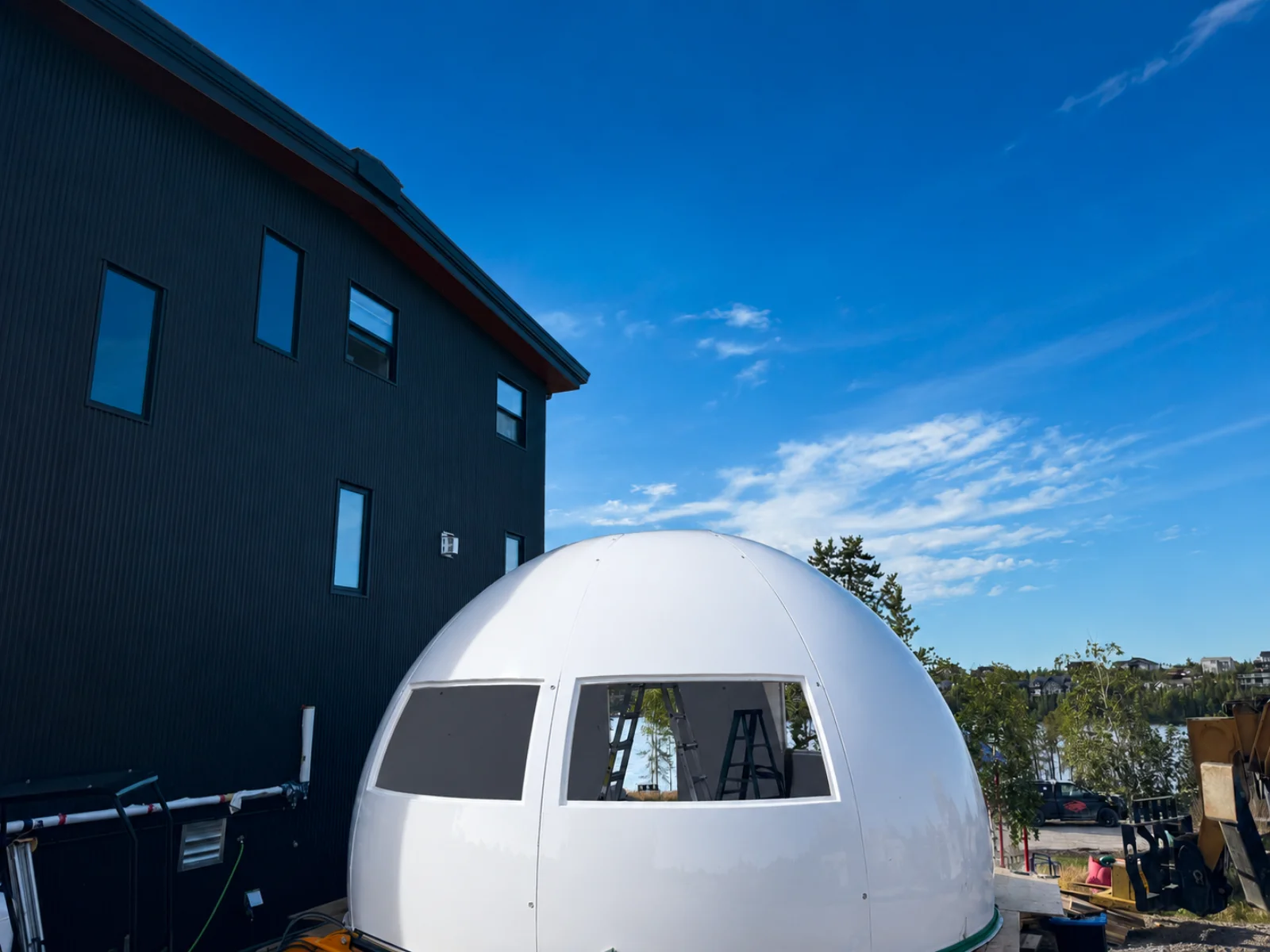
The thermal and optical numbers come from glazing industry measurements. The delivery is documented: a MarsDome with Horizon Windows shipped from the production floor to Yellowknife, Canada — 62 degrees north — where a view survives an extreme climate.
The choice is not between two grades of the same thing. It is between a material with built-in limits and a material without them.
Polycarbonate can be coated, polished, and replaced. Glass does not need any of it. For a structure that sells a view, that is the whole decision.
Continue reading: the same physics that keeps a view clear also keeps a dome quiet: Noise: The One Problem Money Can't Fix.
Material choice changes every surface in the structure: From Fabric to MarsDome: Not an Upgrade, a Structural Category Change.