
The smell that comes back every spring
A guest checks into a fabric dome in late March. Within an hour, the front desk gets a call. The unit smells musty. The guest wants a different room — or a refund.
The cleaning crew did their job. The unit was power-washed in October, scrubbed with anti-mold chemicals, dried for two days before closing for winter. By spring, the smell is back. Along with the review: "Beautiful location, but the tent smelled like a basement. Two stars."
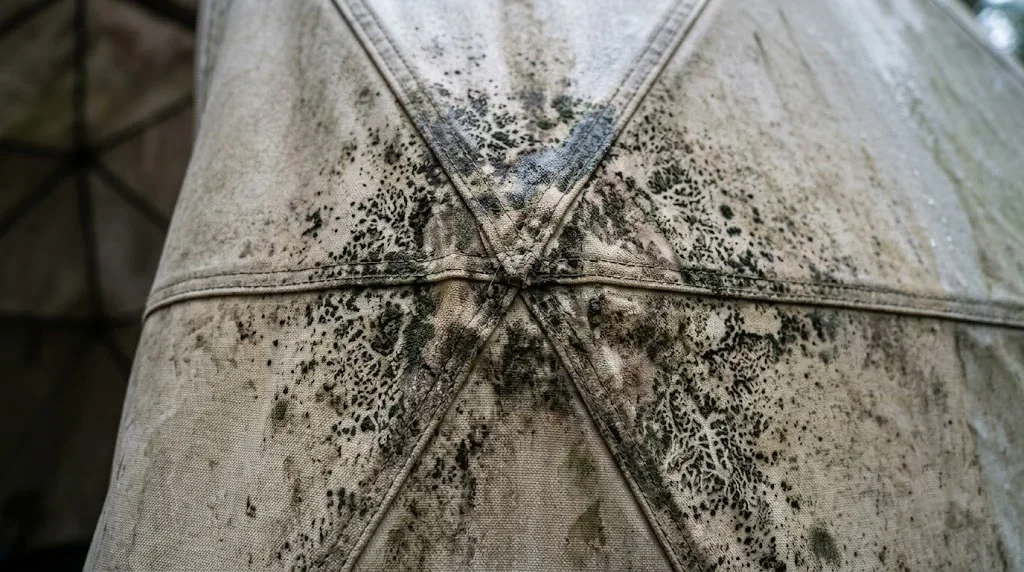
The musty smell guests complain about is not a sign your crew missed something. It is mold growing inside seam folds and fabric pores — places cleaning cannot reach. The surface looks clean. The material is not.Operators in the Pacific Northwest — from the Oregon coast to Vancouver Island — learn this within two years. Operators in the Southeast — Florida, Georgia, coastal Alabama — learn it within one season. By then, the reviews are already up.
Why cleaning buys you weeks, not years
Fabric dome covers are PVC-coated polyester. The PVC coating stops rain. It does not stop mold.
After rain or heavy dew, water sits in the fabric's surface texture and inside seam folds — 2 to 4 millimeter crevices where two panels overlap. Mold spores land there. They germinate. They grow into the material.
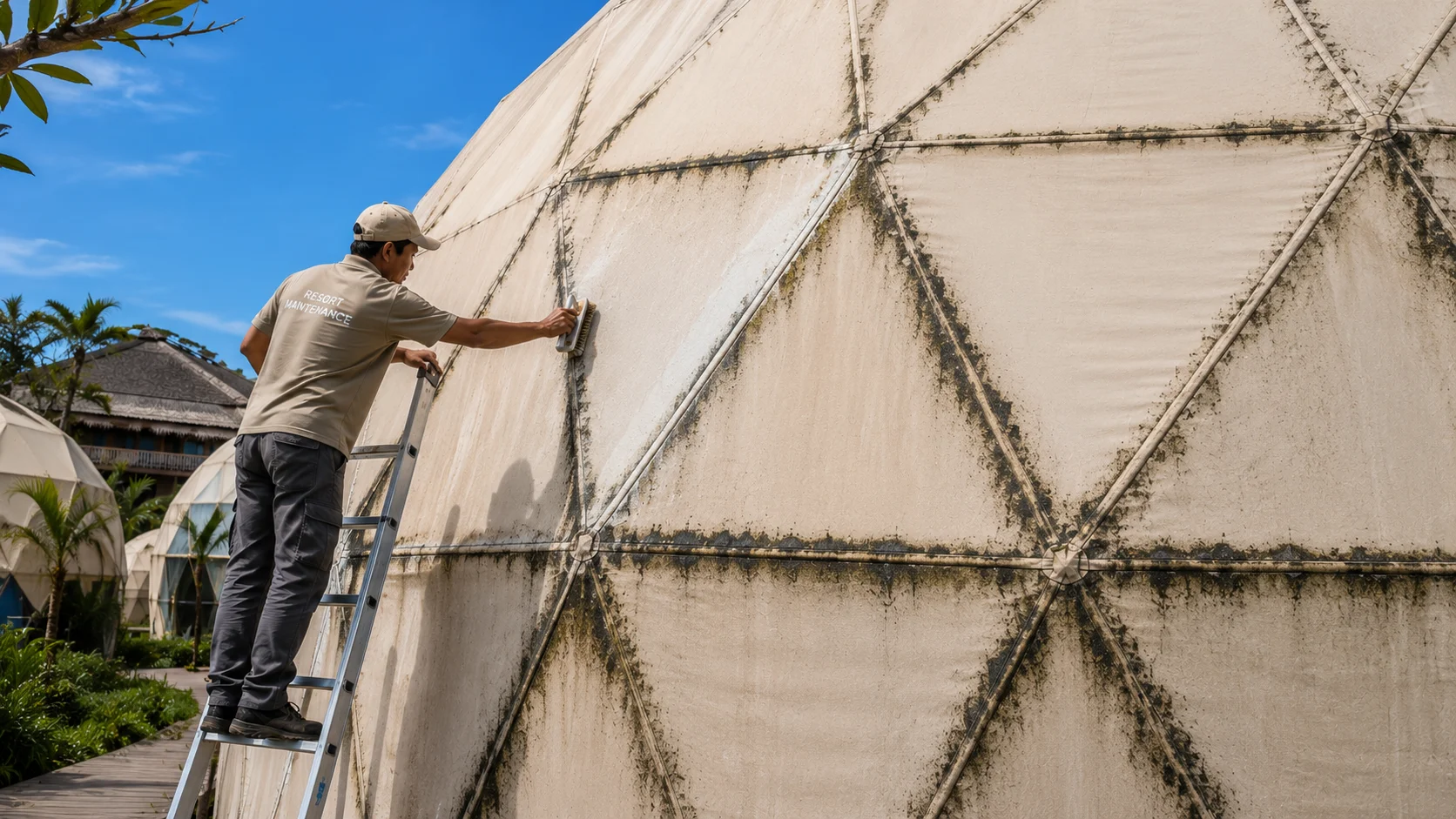
A pressure washer hits the surface. It does not reach inside the seam fold. A brush on a ladder helps — if someone scrubs every inch of every seam by hand. Even then, the textured fabric inside the fold resists complete cleaning. Mold roots remain in the pores. Give it warmth and moisture, and it grows back.
The interior has the same problem at a different location. Condensation forms on the cold interior surface at night, runs down to where fabric meets steel frame, and sits there — dark, damp, never seeing sun. Within 24 to 48 hours above 4 degrees Celsius, new mold colonies are established.
You can clean it. You should clean it — reviews depend on it. But you are cleaning the visible growth, not the condition that produces it. The mold returns. The cleaning calendar repeats. That is year one, year three, year five.
Your two choices: keep cleaning, or replace the cover
Every fabric dome operator eventually faces the same math.
Option one: keep cleaning. Power washing, chemical treatment, hand-scrubbing seams — 1 to 2 days per unit offline, 200 to 600 dollars per treatment in chemicals and labor, twice a year in humid climates, three to four times in the tropics. Every year. The mold still comes back between cleanings. Guests still smell it. Reviews still reflect it.

Option two: replace the cover. Most fabric covers last 5 to 8 years in the field — shorter in high-UV or high-humidity environments. A replacement cover costs 30 to 50 percent of the original dome price, plus installation labor, plus the unit offline during replacement. And when the new cover goes on, the clock starts again. Seam folds. Surface texture. Condensation. The same three pathways. The same cycle.
Neither option solves the problem. One manages it with labor. One resets it with capital. Both repeat.
Mold on a surface you can actually reach
MarsDome uses a 106-millimeter composite sandwich shell. The exterior and interior surfaces are a gel coat — smooth and non-porous.
Mold can grow on this surface. In consistently humid, shaded conditions, mildew spots can appear on a MarsDome exterior — just as they can on a painted wall, a boat hull, or any surface exposed to moisture and organic dust.
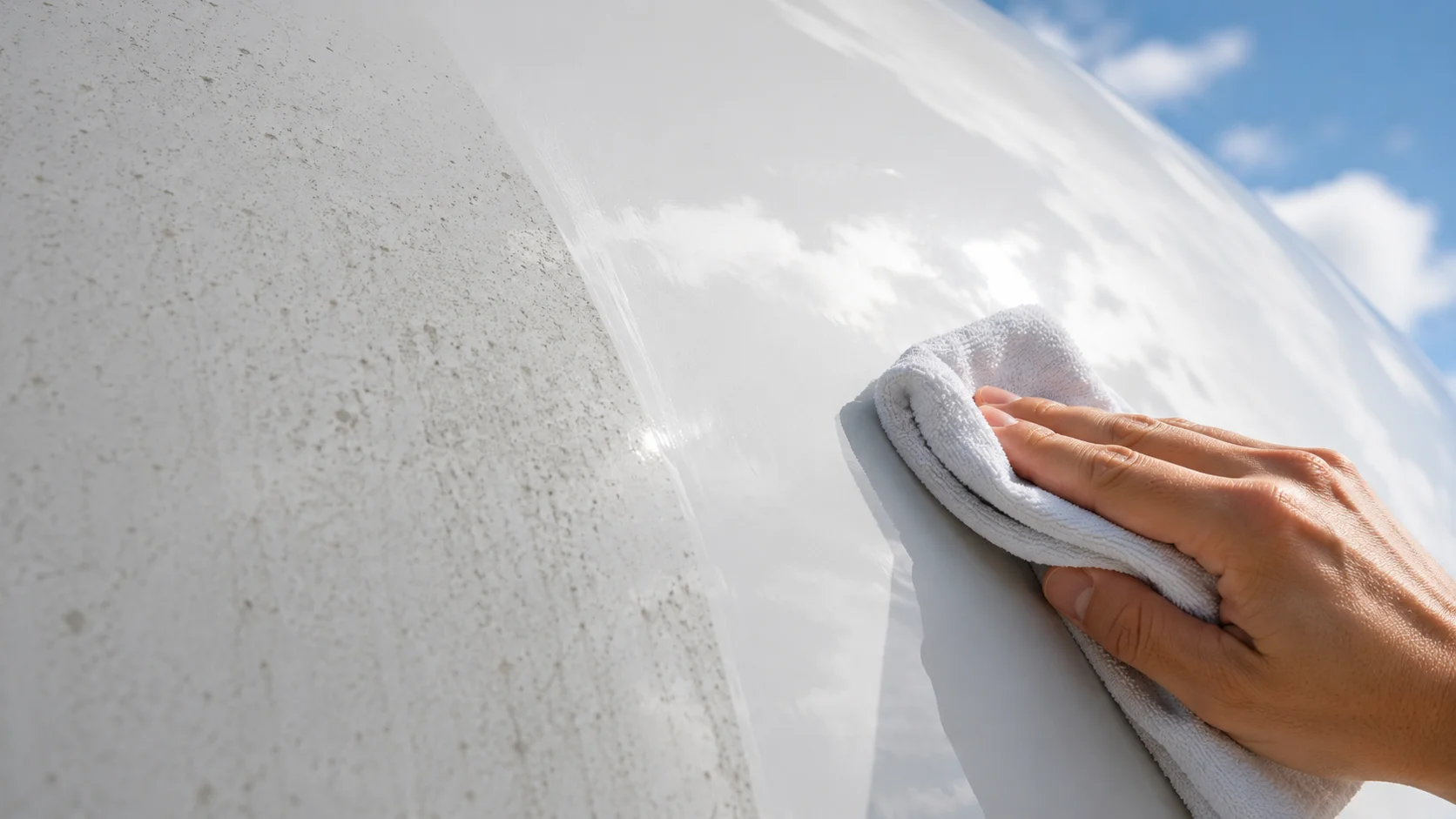
The difference is what happens next. A wet cloth removes it. No seams. No pores. No hidden folds. The mold sits on the surface. It does not grow into the material. There is nowhere for roots to hide.
No internal steel frame means no condensation at contact points. R-28 insulation keeps the wall surface within 1 to 2 degrees of room temperature — at normal indoor humidity, the wall stays dry. Any residual condensation would appear first on glass or other thermal bridges, not the wall. If the inside stays dry, interior mold never starts.
Annual exterior maintenance: wash with water. That is it. No scrubbing seams. No anti-mold chemicals. No cover to replace at year 5.
What disappears from the 10-year spreadsheet
A fabric dome over 10 years: annual cleaning labor and chemicals, at least one cover replacement, the downtime for each cleaning and each replacement, the reviews lost to mold complaints between cleanings.
A MarsDome over 10 years: wash the exterior annually. Wipe off any surface mold if it appears. No cover replacement. No chemicals. No seam scrubbing.
The question is not whether mold can grow on a structure. Spores are in the air everywhere. Given shade, humidity, and time, mold will try to grow on anything.
The question is whether you can remove it with a cloth — or whether you are scheduling your next cover replacement.
* The Maintenance Treadmill — What Fabric Dome Operators Spend Year After Year
* Why Fabric Domes Leak — And Why It's Not a Maintenance Problem