
The AC never stops
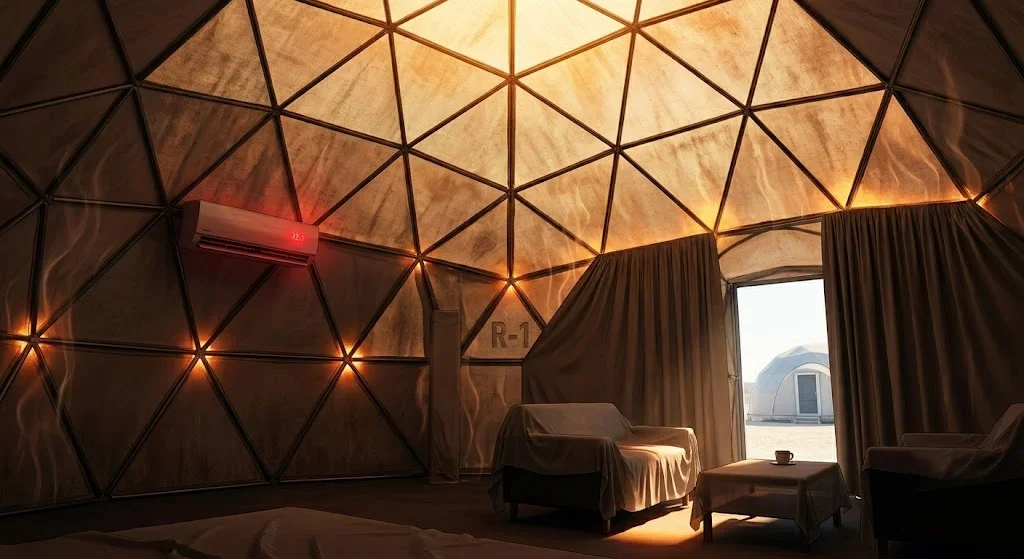
July. Arizona. 38°C outside. The canvas dome has been baking in the sun since 10am. The AC unit is running at full capacity. It has been running at full capacity since noon. It will run at full capacity until 9pm.
The thermostat is set to 24°C. The indoor temperature is 26°C and climbing. The AC cannot catch up. It was sized correctly for the space — but it was not sized for a wall with the insulation value of a single-pane window.
A canvas tent with an aftermarket insulation liner reaches R-1 to R-2. In summer, solar radiation passes through the fabric and heats the interior directly. The AC fights two enemies at once: conducted heat through the walls and radiated heat through the skin. It loses to both.
What R-value actually controls
R-value measures resistance to heat flow. The higher the number, the slower heat moves through the material. At R-1, heat pours through the wall. At R-28, it crawls.
For a 28 m² (300 sq.ft) dome under summer sun, the difference is not subtle. At R-1, the peak cooling load reaches 8,000 to 12,000 BTU per hour. At R-28, the same space under the same sun: 2,000 to 5,000 BTU per hour. The physics is not approximate. It is Fourier's Law: heat transfer rate equals temperature difference divided by thermal resistance.
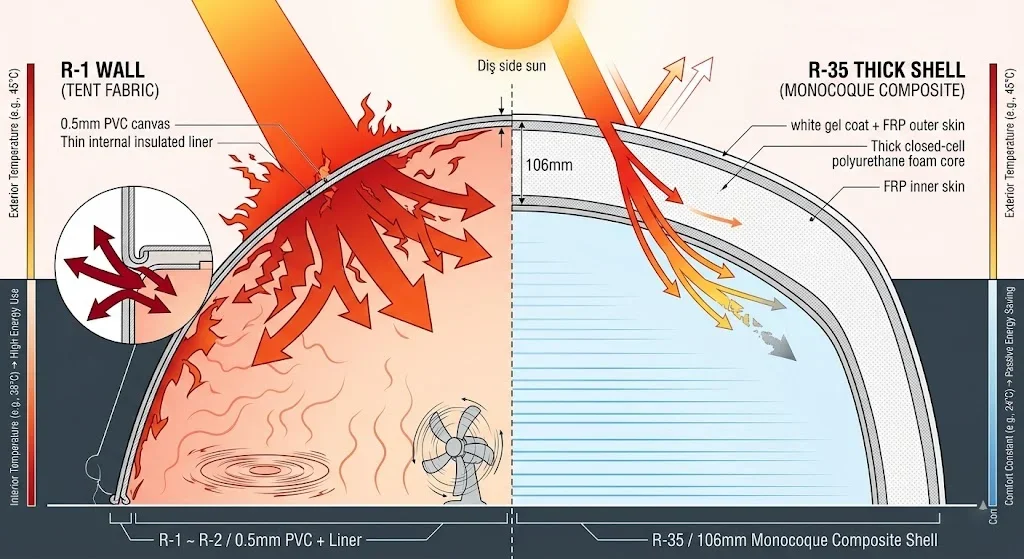
A canvas tent adds an insulation liner and reaches R-1 to R-2. Double-layer fabric, insulated floor platform — the R-value inches up marginally. The fundamental problem does not change: the insulation is a liner hung inside a tent. It is not the wall. Solar radiation still hits the fabric first. Heat still finds the gaps at seams and zippers. The liner reduces some conducted heat. It cannot stop radiated heat from a sun-baked outer skin.
The equipment the R-value forces you to buy
This is where R-value becomes a line item on an invoice. The chain has four links. Each one depends on the one before it.
Link 1: air conditioner size. A 28 m² tent at R-1 needs 8,000 to 12,000 BTU/hr of cooling. The same footprint at R-28 needs 2,000 to 5,000 BTU/hr. The AC unit for the tent is 2 to 3 times larger.
Link 2: daily energy consumption. A 24 SEER2 mini-split pulling 700 to 900 watts near-continuously through a hot day: 20 to 35 kilowatt-hours. The R-28 structure's unit pulls 400 to 700 watts intermittently: 5 to 15 kilowatt-hours.
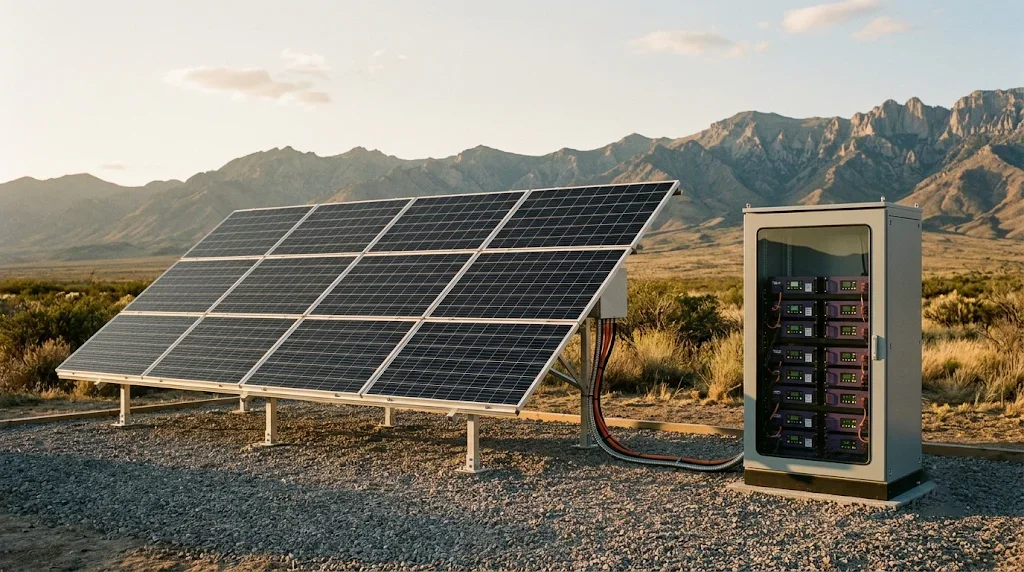
Link 3: solar array. At 5 peak sun hours per day and 75% system efficiency, the R-1 tent requires a 7 to 12 kilowatt solar array just for cooling. The R-28 structure: 3 to 7 kilowatts.
Link 4: battery bank. Overnight cooling load for R-1: 10 to 18 kilowatt-hours of battery storage. For R-28: 3 to 7 kilowatt-hours.
At current off-grid installed costs — $4 to $6.50 per watt for solar, $500 to $700 per kilowatt-hour for LiFePO4 battery storage — the equipment cost difference between cooling an R-1 tent and an R-28 structure is $15,000 to $35,000. This is not a projected savings spread over 10 years. This is the difference in the check you write to the solar contractor before the first guest checks in.
The wall that is the insulation
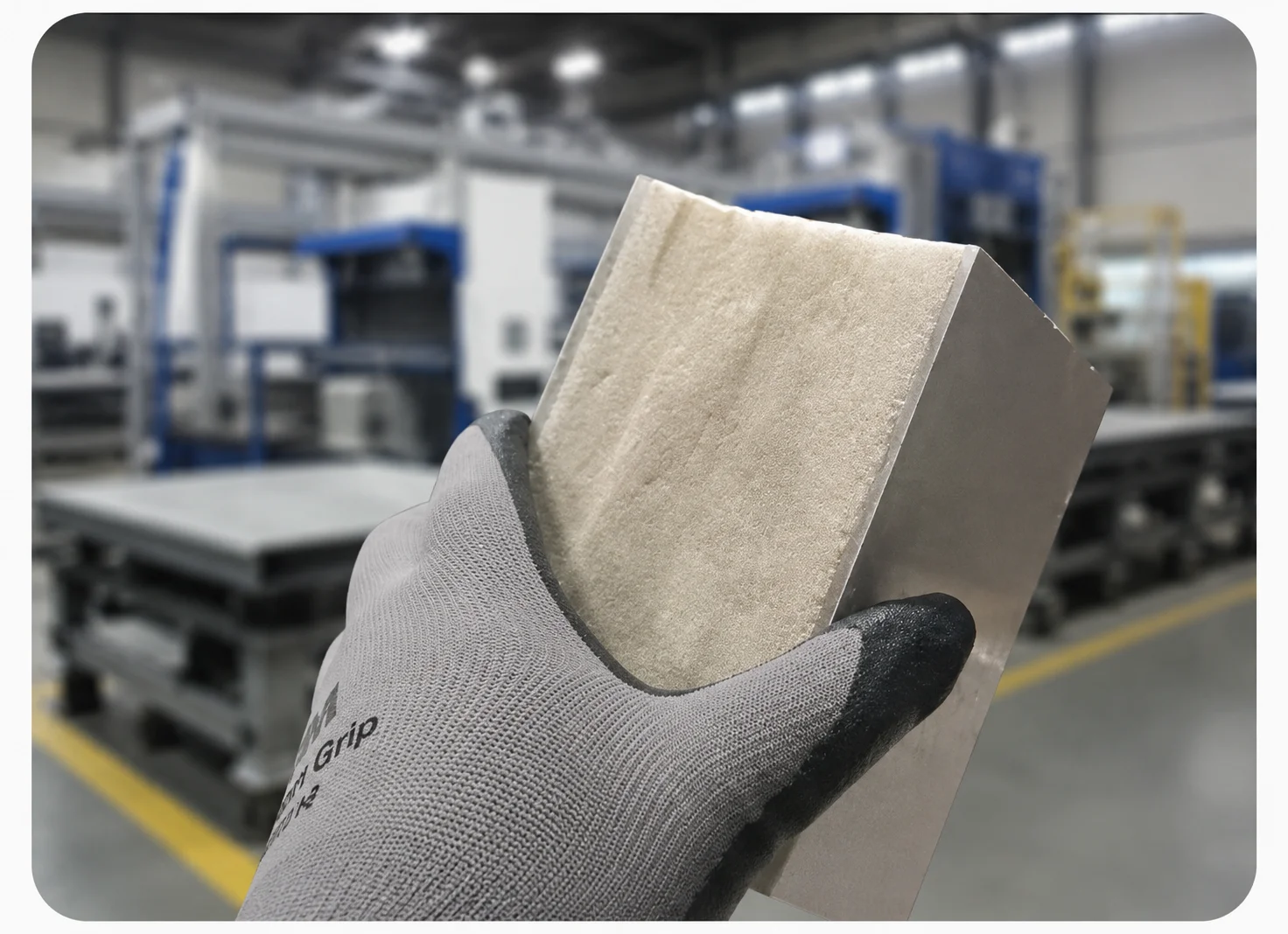
Structural insulated panels have existed since the 1930s: two rigid skins bonded to an insulating foam core. No separate framing. No studs. No thermal bridges between inside and outside. The principle survived 90 years of building codes because the physics does not age.
MarsDome applies this principle in a curved composite shell. Each panel is a 106mm (4-inch) sandwich: 1.5mm fiber-reinforced polymer outer skin, 103mm closed-cell polyurethane foam core, 1.5mm FRP inner skin. Three layers fused — not glued, not fastened — into a single structural element. The insulation is the structure. There is no separate frame to create cold paths in winter or heat paths in summer.
The result: R-28 insulation with zero thermal bridging. Every square centimeter of the shell performs at R-28. Nine panels interlock. Forty-three bolts — embedded in the shell, isolated from the interior by the foam core. The white gel coat exterior reflects solar radiation. The aluminum foil vapor barrier blocks radiant heat transfer. The shell stops heat on the outside, before it ever reaches the interior surface.
The chain runs before you write a check
This is not a debate about which insulation is better. It is a chain of four numbers that multiply into a dollar amount: R-value → cooling load → AC size → solar equipment cost. The chain runs the same way for every structure placed under the same sun.
At R-1 to R-2, the chain produces a 7 to 12 kilowatt solar array and a 10 to 18 kilowatt-hour battery. At R-28, the same chain produces a 3 to 7 kilowatt array and a 3 to 7 kilowatt-hour battery. The structure with the higher R-value pays for a smaller off-grid system. Not eventually. Immediately.
The canvas tent invoice shows you a purchase price. It does not show you the solar system that purchase price forces you to buy. That number appears on a different invoice — from a different contractor — weeks later. It is not separate from the cost of the tent. It is the cost of R-1.
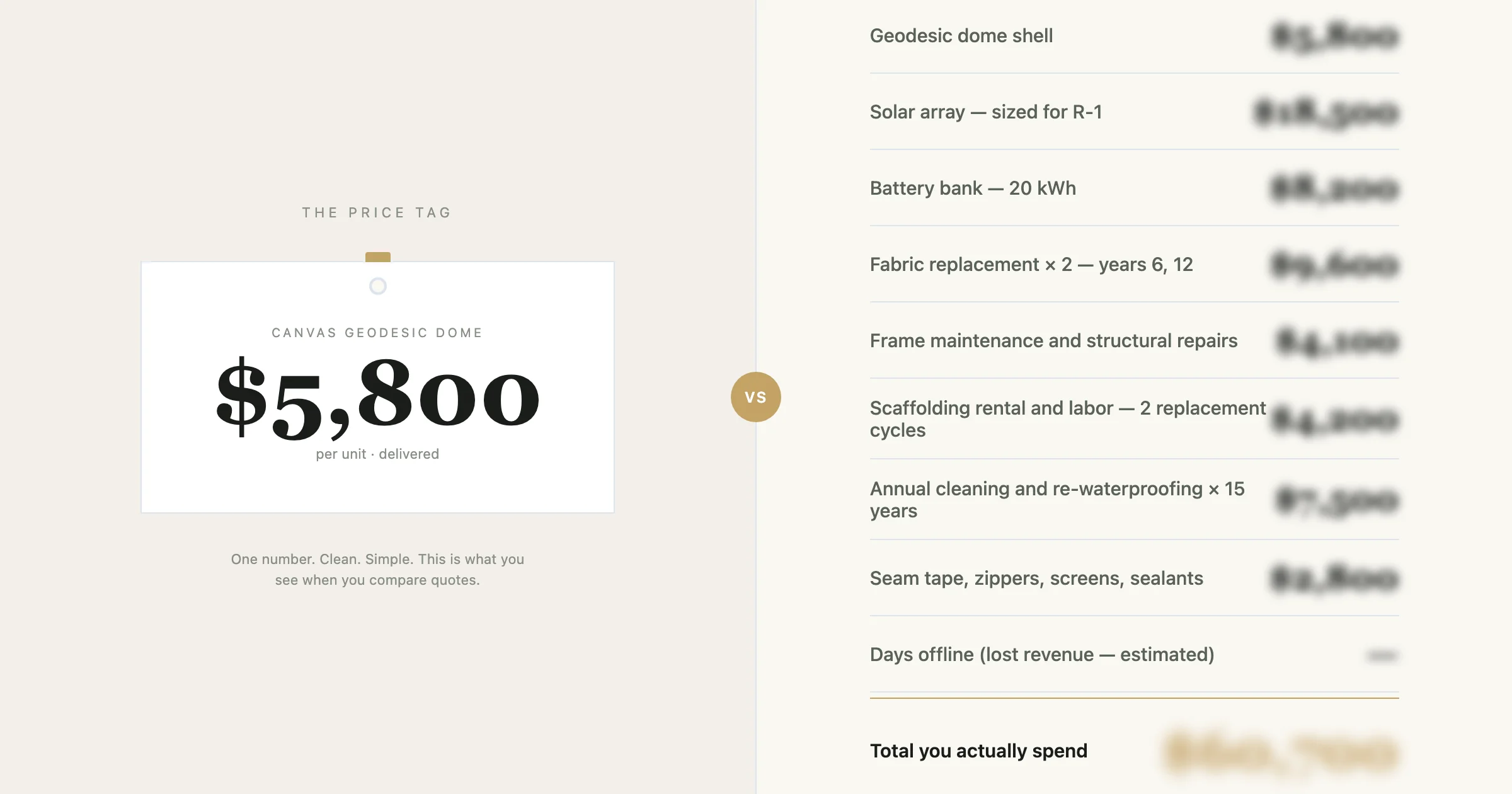
The R-value is not a specification to compare after you choose the structure. It is the number that determines what equipment you buy. Choose the R-value first. The equipment list follows.
*Run the full cooling load comparison: Do the Math →*
*See the complete specification: MarsDome Technical Specifications →*